Forgot your Password?
New Member Registration
Visit our sister site:
Landmark: Earth
Places important in American History.
|
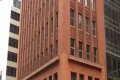
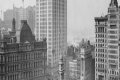
40 Wall Street is a 70-story skyscraper originally known as The Bank of the Manhattan Company building. It was completed in 1930 after only 11 months of construction, and was the tallest building in the world for less than 2 months.
|
|
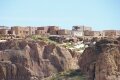
Abo is a pueblo ruin in New Mexico that is preserved in the Salinas Pueblo Missions National Monument. There is a trail through the mission ruins, and a 0.5 mile (0.8 km) trail around the unexcavated pueblo ruins.
|
|
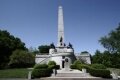
This Illinois State Historic Site is the final resting place of Abraham Lincoln, his wife, Mary Todd Lincoln, and three of their four sons. The exterior includes a terrace and an obelisk, while the interior contains a rotunda and the burial room.
|
|
Opened in 1857, the building is the oldest grand opera house in America used for its original purpose. It is the home of the Pennsylvania Ballet and the Philadelphia Opera Company.
|
|
Also known as "Sky City", Acoma Pueblo is a American Indian site built on top of a 367-foot (112 m) sandstone mesa. It is regarded as the oldest continuously inhabited community in the United States.
|
|
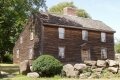
This National Historical Park contains the home of presidents John and John Quincy Adams. It features the house, the surrounding farmland and several other buildings, including the Stone Library.
|
|
The Adler opened in 1930 and was the first planetarium in the Western Hemisphere. Donated to the city of Chicago by Max Adler, the planetarium was an attraction at the great Chicago exposition of 1933-34.
|
|
Also know as the First African Baptist Church, this Beacon Hill landmark is the oldest black church building in the United States. The building was dedicated on December 6, 1806.
|
|
The building is significant for being the original chapter of the Alaska Native Brotherhood, an organization representing native rights in Alaska.
|
|
The Amana Colonies are a group of settlements of German Pietists. They lived a communal life until the mid 1930s. Today, Amana is a major tourist attraction known mainly for its restaurants and craft shops.
|
|
The first Mother's Day was celebrated here on May 10, 1908 inspired by Ann Jarvis, who had been active in Mother's Day campaigns for peace and worker's safety and health since end of American Civil War.
|
|
The Battle of Ball's Bluff, on October 21, 1861, was a small but embarrassing defeat for the Union early in the American Civil War. The land for a cemetery was donated in 1865. It is the smallest national cemetery in the United States.
|
|
Built in 1853 by Eli and Lemuel Chenoweth, well-known bridge builders of the time, the 148 feet span is now closed to motor traffic. It was restored in 1999.
|
|
Barton Academy was the first public school in the state of Alabama. The building was named for Willoughby Barton, an Alabama state legislator from Mobile who introduced an act that created the Board of School Commissioners of Mobile County
|
|
Built for Armstead Barton in the 1840s, this antebellum, privately-owned home is an unusually sophisticated Greek Revival style plantation house with a small Doric entrance and limestone-paved rear courtyard.
|
|
Bathhouse Row is a collection of bathhouses which were included in 1832 when the Federal Government took over the land to preserve 47 natural hot springs and their area of origin on the lower slopes of Hot Springs Mountain.
|
|
The monument commemorates the Battle of Baltimore fought during the War of 1812. Designed by Maximilian Godfrey and built in 1815-25, the monument is 39 feet tall and is topped by a statue by Antonio Capellano of a female figure representing Baltimore.
|
|
The monument was erected by the Daughters of Utah Pioneers in memory of the Battle of Bear River (Massacre at Boa Ogoi), which took place on January 29, 1863, between the United States Army and the Shoshone Indians.
|
|
This is the point from which a rectangular-grid land survey system was established in 1785, which provided for administration and subdivision of land in the Old Northwest Territory.
|
|
According to the U.S. National Park Service, this is where the first attempts at contact between Europeans and Alaskan natives were made by naturalist Georg W. Steller, surgeon aboard Vitus Bering's St. Peter.
|
© 2007 - 2012 Robert J. Moran