Dallas Landmarks
Tourist attractions, famous landmarks and other points of interest in Dallas, Texas:
|
The district is 68 acres (0.28 km²) and is home to some of Dallas’ most significant cultural landmarks including the Dallas Black Dance Theatre, Dallas Museum of Art, Morton H. Meyerson Symphony Center, Nasher Sculpture Center.
|
|
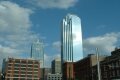
The Bank of America Tower was completed in 1985 and is the tallest building in the city, measuring over 900 feet (275 meters), with 72 stories.
|
|
Designed by renowned architect IM Pei in the modernist architectural style, City Hall was completed in 1978. It was inspired by the J. Erik Jonsson Central Library building located across the street.
|
|
The plaza contains several of the city's landmarks including the John Neely Bryan Cabin, the JFK Memorial and the Old Red Courthouse.
|
|
Dallas Heritage Village is a living history museum portraying life in North Texas from 1840-1910. The museum is composed of 38 historic structures and a working Civil War era farm.
|
|
The building was officially opened to the public in January 1984. Situated in the Arts District, the museum is close to several other significant cultural attractions.
|
|
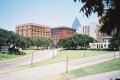
The site is considered the place where city founder John Neely Bryan first established a trading post. It is also the location of President John F. Kennedy's assassination on November 22, 1963.
|
|
Fair Park is a 277-acre (1.12 km²) recreational and educational complex. It is home to nine museums, six performance facilities, a lagoon, and the largest ferris wheel in North America. Many of the buildings were build for the 1936 Texas Centennial.
|
|
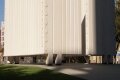
Funded by private donations and designed by Philip Johnson in 1970, the open-roofed square room of four solemn walls contains a black marble slab, engraved with the words "John Fitzgerald Kennedy."

|
|
Bryan is credited with the founding of the city of Dallas. This cabin is a reconstruction which was moved to this location in 1971.
|
|
This center was designed by Mexican architect and AIA gold medal winner, Ricardo Legorreta. It supports the preservation, development, and promotion of Latino and Hispanic arts and culture.
|
|
The facility has 64 licensed beds and a medical staff of more than 200 physicians.
|
|
The 'Mort' was designed by world-renowned architect IM. Pei and is home to the Dallas Symphony Orchestra. The Center was opened in September of 1989.
|
|
Formerly the Dallas Museum of Natural History, founded in 1936 as part of the Texas Centennial, the organization merged with The Science Place in 2006.
|
|
Built in 1892 from red sandstone, this Romanesque-styled courthouse has been carefully restored and is now used as a museum and visitors' center.
|