Forgot your Password?
New Member Registration
Visit our sister site:
Landmark: Earth
Places of importance to American Indians.
|
Abo is a pueblo ruin in New Mexico that is preserved in the Salinas Pueblo Missions National Monument. There is a trail through the mission ruins, and a 0.5 mile (0.8 km) trail around the unexcavated pueblo ruins.
|
|
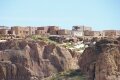
Also known as "Sky City", Acoma Pueblo is a American Indian site built on top of a 367-foot (112 m) sandstone mesa. It is regarded as the oldest continuously inhabited community in the United States.
|
|
The Agua Caliente Indian Reservation occupies 126.706 km² (48.921 sq mi), including parts of the cities of Palm Springs, Cathedral City, and Rancho Mirage.
|
|
Created by Presidential proclamation on January 11, 2000, the 71,100 acre (288 km²) monument has over 450 distinct Native American structures, some of large pueblos containing more than 100 rooms each.
|
|
The building is significant for being the original chapter of the Alaska Native Brotherhood, an organization representing native rights in Alaska.
|
|
Often referred to as "The Rock" or simply Alcatraz, the island has been the location of a lighthouse, a fort, a military and federal prison and an American Indian protest. It has become a popular tourist attraction.
|
|
The entire island is an American Indian reservation composed mainly of Tsimshian and is a cultural crossroads for Tlingit and Haida Natives as well.
|
|
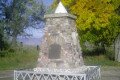
The monument was erected by the Daughters of Utah Pioneers in memory of the Battle of Bear River (Massacre at Boa Ogoi), which took place on January 29, 1863, between the United States Army and the Shoshone Indians.
|
|
According to the U.S. National Park Service, this is where the first attempts at contact between Europeans and Alaskan natives were made by naturalist Georg W. Steller, surgeon aboard Vitus Bering's St. Peter.
|
|
This is an archaeological site once occupied by a Mississippian culture between AD 1250 and 1550. It includes 18 earthen mounds, the tallest being roughly 45 feet high.
|
|
The monument covers 131 square miles (339 km2) and encompasses the floors and rims of the three major canyons: de Chelly, del Muerto, and Monument. These canyons were cut by streams with headwaters in the Chuska mountains.
|
|
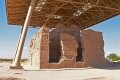
The national monument consists of the ruins of multiple structures surrounded by a compound wall constructed by the Hohokam, who farmed the Gila Valley in the early 1200s. "Casa Grande" is Spanish for "big house."
|
|
The Cherokee National Capitol served as the headquarters for Cherokee government from the time of its completion until 1907 when
Oklahoma became a State. The structure is fairly well preserved and is a late example of the
Italianate style.
|
|
The Gnadenhutten Massacre, also known as the Moravian Massacre, was the killing on March 8, 1782, of ninety-six Christian American Indians, including sixty-eight women and children, by American militia from Pennsylvania during the American Revolution.

|
|
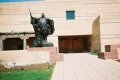
Dedicated to the preservation and perpetuation of Pueblo Indian Culture, History and Art, the Center is a 10,000 sq ft (1,000 m2) museum of the authentic history and artifacts of traditional Pueblo cultures and their contemporary art.
|
|
This artwork consists of 12 telephone pole-sized arrows and larger than life cement teepees.
|
|
These austere yet beautiful reminders of this earliest contact between Pueblo Indians and Spanish Colonials consists of the ruins of four mission churches: Quarai, Abó, Gran Quivira and the partially excavated pueblo of Las Humanas.
|
© 2007 - 2012 Robert J. Moran