Springfield, Illinois
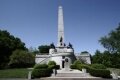
This Illinois State Historic Site is the final resting place of Abraham Lincoln, his wife, Mary Todd Lincoln, and three of their four sons. The exterior includes a terrace and an obelisk, while the interior contains a rotunda and the burial room.
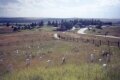
Cleator, Yavapai County, Arizona
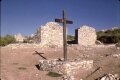
Created by Presidential proclamation on January 11, 2000, the 71,100 acre (288 km2) monument has over 450 distinct Native American structures, some of large pueblos containing more than 100 rooms each.
San Francisco, California
The AIDS Memorial Grove is dedicated to individuals who have died as a result of acquired immune deficiency syndrome (AIDS). Owned and administered by the City of San Francisco, it is an affiliated area of the National Park Service.
Titusville, Brevard County, Florida, 32780
Founded in 1960, the APHF is the nation's first national police museum and memorial dedicated to American law enforcement officers killed in the line of duty.
Albany County, Wyoming
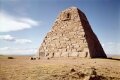
Dedicated to brothers Oakes Ames and Oliver Ames, the monument is a four-sided, random ashlar pyramid, 60 feet square at the base and 60 feet high, constructed of light-colored native granite. It was completed in 1882.
Alaska
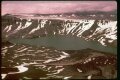
This remote place is perhaps the least visited unit of the National Park System. The national monument is 137,176 federal acres (555 km2) and the preserve is 465,603 acres (1,884 km2) of which 439,863 are federal.
Arlington, Virginia
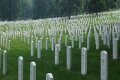
During the American Civil War, the grounds of the mansion were selected as the site of Arlington National Cemetery, in part to ensure that Confederate General Robert E. Lee would never again be able to return to his home.
Arlington, Virginia
The cemetery was established on the grounds of Arlington House, formerly the estate of the family of Robert E. Lee's wife Mary Anna Custis Lee, a descendant of Martha Washington.
Baltimore, Maryland
The Armistead Monument was erected in 1882. The monument honors Colonel George Armistead, the commander of Fort McHenry when the British attacked in the Battle of Baltimore on September 13, 1814.
Baltimore, Maryland
The monument commemorates the Battle of Baltimore fought during the War of 1812. Designed by Maximilian Godfrey and built in 1815-25, the monument is 39 feet tall and is topped by a statue by Antonio Capellano of a female figure representing Baltimore.
Franklin County, Idaho
The monument was erected by the Daughters of Utah Pioneers in memory of the Battle of Bear River (Massacre at Boa Ogoi), which took place on January 29, 1863, between the United States Army and the Shoshone Indians.
Philadelphia, Pennsylvania
Located in the the Franklin Institute Science Museum, the National Memorial features a 20 feet (6m) tall statue of Benjamin Franklin sculpted by James Earle Fraser between 1906 and 1911.
Bennington, Bennington County, Vermont, 05201
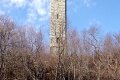
The Bennington Battle Monument is a stone obelisk, which commemorates the Battle of Bennington during the American Revolutionary War.
Douglas, Converse County, Wyoming
This monument is dedicated to the bullwacker, William Hooker, whose adventures of driving teams of oxen throughout the Old West became popular in the 1920's.
Grizzly Ridge, Colorado
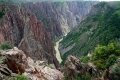
This unique and spectacular landscape was formed slowly by the action of water and rock scouring down through hard Proterozoic crystalline rock. No other canyon in North America has such narrow opening, sheer walls, and startling depths.
Enterprise, Coffee County, Alabama, 36330
The city erected the statue because the destruction of the cotton crop led to agricultural diversity and more prosperity than had ever come from cotton alone. It is said to be the only statue to an insect pest in the world.
Ross Flat, Wyoming
The Bozeman Trail was an overland route connecting the Oregon Trail to the gold rush territory of Montana. John Bozeman, among others, led the first group of about 2,000 settlers up the trail in 1864.
Chinle, Apache County, Arizona
The monument covers 131 square miles (339 km2) and encompasses the floors and rims of the three major canyons: de Chelly, del Muerto, and Monument. These canyons were cut by streams with headwaters in the Chuska mountains.
Alaska
Cape Krusenstern National Monument stretches 70 miles along the Chukchi Sea shoreline. It is made up mainly of a coastal plain, containing large lagoons and rolling hills of limestone. Beach ridges provide evidence of 5000 years of human activity.
Coolidge, Pinal County, Arizona
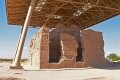
The national monument consists of the ruins of multiple structures surrounded by a compound wall constructed by the Hohokam, who farmed the Gila Valley in the early 1200s. "Casa Grande" is Spanish for "big house."
Crook County, Wyoming
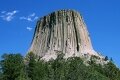
Devil's Tower rises 1267 feet (386 m) above the surrounding land and is part of the United States first official National Monument. It played a large role in the movie "Close Encounters of the Third Kind."
Clayton, Iowa
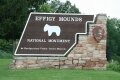
Effigy Mounds National Monument preserves more than 200 prehistoric mounds built by Native Americans including numerous effigy mounds shaped like animals, including bears and birds.
Davis, West Virginia
The Fairfax Stone was a surveyor's marker placed to settle a boundary dispute and to determine the proprietorship and boundaries of a large tract of largely unsurveyed land in the colonies of Maryland and Virginia during the Survey of 1736/37.
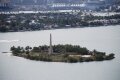
Miami, Miami-Dade County, Florida
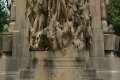
A 110-foot (34 m) high obelisk with allegorical sculptures at its base stands as a monument to Miami pioneer Henry M. Flagler. It was constructed in the center of an artificial island in memory of Flagler, who died in 1913.
Savannah, Chatham County, Georgia, 31401
Florence Martus, aka "the Waving Girl", took it upon herself to be the unofficial greeter of all ships that entered and left the Port of Savannah, Georgia, between 1887 and 1931.
Baltimore, Maryland, 21230
During the Battle of Baltimore in 1814, a lawyer named Francis Scott Key was watching the U.S. flag wave over Fort McHenry. He was inspired to write a poem called the "Star-Spangled Banner."
Washington, District of Columbia, 20024
Spread over 7.5 acres, the memorial is composed of four outdoor rooms, one for each of FDR's terms of office. Each of the four areas of the memorial contains a waterfall.
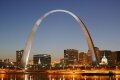
St. Louis, Missouri
Officially named the Jefferson National Expansion Memorial, the arch was built to commemorate the Louisiana Purchase and St. Louis' role as the "gateway" to the western frontier of the early United States.
Alexandria, Virginia
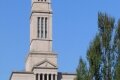
The tower is fashioned after the Lighthouse of Alexandria, in part because of town's namesake, and the masonic interest in great buildings of the ancient world.
Gnadenhutten, Ohio
The Gnadenhutten Massacre, also known as the Moravian Massacre, was the killing on March 8, 1782, of ninety-six Christian American Indians, including sixty-eight women and children, by American militia from Pennsylvania during the American Revolution.
Los Angeles, California
The Go For Broke Monument commemorates Japanese Americans who served overseas in the United States Military during World War II. The monument's wall lists the names of 16,126 Nisei (Second generation Japanese-American) soldiers.
Cholame, California
Famous for his role in the movie "Rebel Without a Cause," James Dean was one of America's most famous teen idols. The irony that the racing enthusiast died in a car accident is reflected in the unique design of this memorial.
Washington, District of Columbia
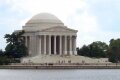
The Jefferson Memorial was officially dedicated on April 13, 1943 - the 200th anniversary of Thomas Jefferson's birthday.
Arkansas
Here at Jenkins Ferry on April 29 and 30, 1864, Union troops fought off an attack by the Confederates and, using an inflatable pontoon bridge, crossed the flooded Saline River and retreated to Little Rock.
Dallas, Dallas County, Texas, 75202
The John Fitzgerald Kennedy Memorial is a monument to U.S. President John Fitzgerald Kennedy in the West End Historic District of downtown Dallas. It was erected in 1970, and designed by noted architect Philip Johnson.
Washington, District of Columbia, 20020
The memorial is in the form of a triangle intersecting a circle. Within the triangle are 19 stainless steel statues designed by Frank Gaylord representing a squad on patrol.
Kansas City, Missouri
When the Liberty Memorial opened on November 11, 1926 , President Calvin Coolidge delivered the dedication speech. The memorial is home to the National World War I Museum, which opened on December 2, 2006.
Washington, District of Columbia
The Lincoln Memorial replicates the form of a Greek Doric temple and contains a large seated sculpture of Abraham Lincoln and inscriptions of two well-known speeches by Lincoln.
Crow Agency, Big Horn County, Montana, 59022
This monument is dedicated to the men who died in the battle of the Little Bighorn. It was build in 1881 making it the oldest national monument in the country.
Rosslyn, Virginia
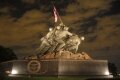
Although the Marine Corps War Memorial depicts one of the famous moments of World War II, the memorial is dedicated to all Marines who have given their lives in the service of the United States since 1775.
Alton, Belknap County, New Hampshire
The Monument Square Historic District of Alton encompasses the 19th-century heart of the town, a roughly triangular open space formed by the junction of Main Street and Old Wolfeboro Road.
Moundville, Hale County, Alabama, 35474
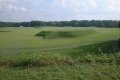
Extensive archaeological investigation has shown that this site was the political and ceremonial center of a regionally organized Mississippian culture between the 11th and 14th centuries.
near Keystone, South Dakota
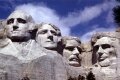
One of the most recognized and controversial landmarks in the United States, Mt. Rushmore features the faces of Presidents Washington, Jefferson, Theodore Roosevelt and Lincoln.
Valley Forge National Historical Park, Pennsylvania
The Arch was erected in 1910 by an act of the 61st Congress. Designed by University of Pennsylvania professor Paul Philippe Cret, the Arch is built in a style similar to the Arch of Titus in Rome.
Plymouth, Massachusetts
It's not an official National Monument, but it was renamed to show that it is dedicated to the entire nation and to keep it from being confused with another monument in the same town called "Pilgrim Monument."
Oklahoma City, Oklahoma County, Oklahoma, 73102
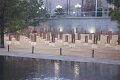
Taking up 3.3 acres, the Oklahoma City National Memorial is the largest memorial of its kind in the United States. It was built in memory of those who died in the 1995 bombing of the Alfred P. Murrah Federal Building.
Oregon Caves, Josephine County, Oregon
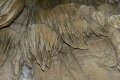
Oregon Caves National Monument and Preserve is a National Monument and Preserve in the northern Siskiyou Mountains of southwestern Oregon in the United States.
Arizona
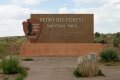
The Petrified Forest features one of the world's largest and most colorful concentrations of petrified wood. The park covers 218,533 acres (341.5 sq mi / 885 km2).
Philadelphia, Pennsylvania
Completed in 1987, the memorial is located in Philly's Penn's Landing area just across from I-95. This section of I-95 is also called the Vietnam Veterans Memorial Highway.
Provincetown, Barnstable County, Massachusetts, 02657
The Pilgrim Monument was built between 1907 and 1910 to commemorate the first landfall of the Pilgrims in 1620 and the signing in Provincetown Harbor of the Mayflower Compact.
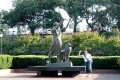
Ponca City, Oklahoma
The Pioneer Woman monument is a bronze sculpture in Ponca City, Oklahoma, designed by Bryant Baker and dedicated on April 22, 1930. The statue is of a sunbonneted woman leading a child by the hand.
Gran Quivira, New Mexico
These austere yet beautiful reminders of this earliest contact between Pueblo Indians and Spanish Colonials consists of the ruins of four mission churches: Quarai, Abo, Gran Quivira and the partially excavated pueblo of Las Humanas.
La Porte, Harris County, Texas
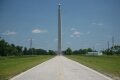
The San Jacinto Monument is a 570 foot (173.7 m) high column topped with a 220 ton star that commemorates the site of the Battle of San Jacinto, the decisive battle of the Texas Revolution. It is the second tallest monument in the United States.
Philadelphia, Pennsylvania, 19131
The Smith Civil War Memorial was erected between 1897 and 1912 under a bequest of Richard Smith. It features several statues of the military leaders of the war and a whispering bench.
Indianapolis, Indiana
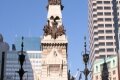
The Soldiers and Sailors Monument was designed by German architect Bruno Schmitz, and was completed in 1901. The basement of the monument is the Colonel Eli Lilly Museum, a museum of Indiana history during the American Civil War.
Philadelphia, Pennsylvania, 19106
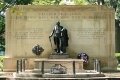
The Tomb of the Unknown Soldier honors the thousands of soldiers who died during the American Revolutionary War, many of whom were buried in mass graves in the park. Built in 1954, it features an eternal flame and a statue of George Washington.
Arlington, Virginia
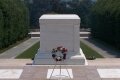
The Tomb of the Unknowns has been guarded continuously, 24 hours a day, 7 days a week, since July 2, 1937. Inclement weather does not cause the watch to cease.
Pearl Harbor, Hawaii
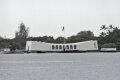
The memorial, dedicated in 1962, spans the sunken hull of the battleship Arizona without touching it. The Navy stipulated that the memorial be in the form of a bridge floating above the ship and accommodate 200 people.
Washington, District of Columbia
The names of the nearly 58,000 Americans who died in Vietnam or who remain unaccounted for are inscribed on the walls in chronological order.
Washington, District of Columbia
During the Vietnam War, over a quarter of a million women volunteered to serve in Vietnam as nurses and other support personnel. This memorial is dedicated to those women.
Washington, District of Columbia
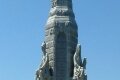
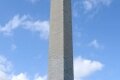
The monument is among the world's tallest masonry structures, standing 555 feet (169.29 m) in height and made of marble, granite, and sandstone. It was designed by Robert Mills, a prominent American architect of the 1840s.
Baltimore, Maryland, 21201
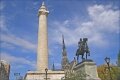
Designed by Robert Mills who also designed the Washington Monument in Washington, D.C., construction began in 1815 and was completed by 1829.
Washington County, Maryland
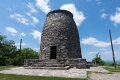
This park is not named for the famous monument in Washington, D.C., but for a 34 feet tall tower on the peak of South Mountain. The rough stone tower was the first monument in the United States dedicated to George Washington.
Top 10 Most Popular Monuments and Memorials Landmarks