Forgot your Password?
New Member Registration
Visit our sister site:
Landmark: Earth
Museums dedicated to the preservation and presentation of history or areas with authentic buildings and historically accurate reproductions.
|
The Amana Colonies are a group of settlements of German Pietists. They lived a communal life until the mid 1930s. Today, Amana is a major tourist attraction known mainly for its restaurants and craft shops.
|
|
Designed by John Haviland, the Greek-Revival style building was the original home to the Franklin Institute, which opened for students in 1826. It has been the city's history museum since 1938.
|
|
Originally the President Street Station, this site and the rail line were key elements of the "underground railroad" by which many slaves escaped to the north before the Civil War.
|
|
Opened in November of 1992, Birmingham Civil Rights Institute is a large interpretive museum and research center that depicts the struggles of the American Civil Rights Movement in the 1950s and 1960s.
|
|
Colonial Williamsburg consists of many of the buildings that formed the original colonial capital of Williamsburg in James City County from 1699 to 1780.
|
|
Dallas Heritage Village is a living history museum portraying life in North Texas from 1840-1910. The museum is composed of 38 historic structures and a working Civil War era farm.
|
|
Completed in 1858, this massive Egyptian Revival style stone building was designed by the same architect who also did the Old Illinois State Capitol. The Dubuque County Historical Society now owns the building and operates it as a local history museum.
|
|
The houses in this small street have been privately owned and lived in since the early 1700's, making Elfreth's Alley the oldest continuously inhabited residential street in the country.
|
|
Fort Mitchell Site is an archaeological site that was declared a National Historic Landmark in 1990.
|
|
This was the most important fur trading post on the upper Missouri until 1867. Visitors included John James Audubon, George Catlin, Father Pierre DeSmet, Sitting Bull, Karl Bodmer, and Jim Bridger.
|
|
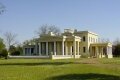
Gaineswood is one of the most significant remaining examples of Greek Revival architecture in Alabama. The house and grounds are currently operated by the Alabama Historical Commission as a historic house museum.
|
|
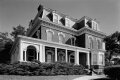
From 1869 until his death, this was the residence of Grenville M. Dodge, who as Chief Engineer supervised the completion in 1869 of the Union Pacific Railroad. His three story, 14 room Victorian mansion was considered one of the finest residences in Iowa
|
|
In September 1777, during the Battle of Germantown, the British General James Agnew occupied the house as his headquarters. He was wounded and died in the front parlor, where his blood stains can still be seen on the floor.
|
|
Built by Oliver S. Marshall in 1887, this house was inhabited by his family until his daughter, Virginia, died in 1996. A good example of Victorian living, the house is now open by appointment by the Historical Society.
|
|
The Huddleston Farmhouse served as a rest stop for travelers using the National Road (Cumberland Road), one of the earliest highways built in America. The Quaker family of 11 who lived in the house provided stables, food and lodging.
|
|
Dedicated to the preservation and perpetuation of Pueblo Indian Culture, History and Art, the Center is a 10,000 sq ft (1,000 m2) museum of the authentic history and artifacts of traditional Pueblo cultures and their contemporary art.
|
|
This historical mansion has been preserved as a museum. Each room has been given a theme and is decorated with period furniture and artifacts. The Vivian Snyder Genealogical Library is considered on of the finest in eastern Ohio.
|
|
It is said that the Emancipation Proclamation was read from the front steps of this historic 1843 home. It's preserved as it looked in 1928, when the Knott family left it and all of its contents to the city.
|
|
The Museum of the American West is part of a museum complex that includes a living history village, a county-owned museum, a picnic pavilion, and a walking path.
|
|
The Newseum is an interactive museum of news and journalism. Built at a cost of $450 million, it opened its doors to the public on April 11, 2008. The First Amendment to the U.S. Constitution is etched into a stone panel facing Pennsylvania Avenue.
|
© 2007 - 2012 Robert J. Moran